Mechanism & formula
The electrolyte ratios: the ratio is the formula
Normal runs a 2:1 sodium-to-potassium ratio. Quick Rehydrate runs 4:1. Those are not arbitrary numbers — they are two different answers to two different physiological questions. The ratio is the formula.
Amount alone doesn’t answer the question
Two electrolyte drinks can contain the same total sodium and still deliver a very different sodium-to-potassium balance. The ratio changes what the formula is actually doing — and there is no single right ratio for every use.
Sodium and potassium are not interchangeable. Sodium is the primary extracellular cation — it is what determines plasma osmolarity, what the SGLT1 transporter moves across the gut, and what water follows during absorption. Potassium is the primary intracellular cation — it is what muscles run on and what most American diets chronically underdeliver.
Sweat is dominantly sodium. A typical 1-litre sweat loss contains somewhere between 460 and 1,840 mg of sodium and far less potassium — roughly 150–500 mg. The sodium deficit from heavy sweating is acute; the potassium gap is real but slower and steadier.
What the ratio does is tell you what the formula is prioritizing. A lower ratio — closer to 1:1 — means the formula is giving potassium roughly equal standing with sodium. A higher ratio — 4:1 or beyond — means the formula is treating sodium as the urgent need and potassium as a maintenance rider.
2:1 — the ratio for steady replacement
Normal is designed to be sipped across a gallon over a day. The job is different from acute rehydration — it is replacing the slow, steady mineral drain of an active life.
Sodium runs at 2,000 mg per gallon in Normal. Potassium runs at 1,000 mg per gallon. The 2:1 ratio reflects two realities: sodium losses from daily activity and light sweating outpace potassium losses, and most people eating a standard Western diet are already short on potassium.
By weighting potassium meaningfully in the all-day formula, Normal does two things at once: replaces the sodium that goes out in sweat, and quietly addresses the potassium gap that most diets leave open. The ratio is not arbitrary — it maps to what a typical active day actually depletes.
For scale: the FDA Daily Value used on nutrition labels is 2,300 mg for sodium and 4,700 mg for potassium. (The 2019 National Academies Adequate Intake for potassium is lower — 3,400 mg for adult men and 2,600 mg for adult women — so the label Daily Value is the more generous reference.) A full gallon of Normal supplies 1,000 mg of potassium, a real contribution against a gap most diets never close.
2,000 mg
sodium per gallon in Normal
1,000 mg
potassium per gallon in Normal
2:1
Na:K ratio — daily mineral replacement
4:1 — acute rehydration is a sodium problem first
When the need is acute — hard effort, significant sweat loss, post-race recovery — the physiology changes. Acute rehydration is a sodium problem first.
Sodium is what the SGLT1 transporter moves. Sodium is what water follows. A session of heavy sweating can strip 1,500–3,000 mg of sodium in an hour. Potassium losses in that same session are real but much smaller. The acute need is skewed hard toward sodium.
Quick Rehydrate runs sodium at 3,000 mg per gallon and potassium at 750 mg per gallon. The 4:1 ratio reflects the physiology of acute sweat loss — sodium first, potassium at maintenance. Diluting that sodium with a lot of potassium would not make the formula better; it would just reduce the density of the electrolyte the body most urgently needs.
The potassium in Quick Rehydrate is not token — 750 mg per gallon is a meaningful amount. But it is a maintenance dose, not an equal partner. The acuity of the need determines the emphasis.
3,000 mg
sodium per gallon in Quick Rehydrate
750 mg
potassium per gallon in Quick Rehydrate
4:1
Na:K ratio — acute sweat replacement
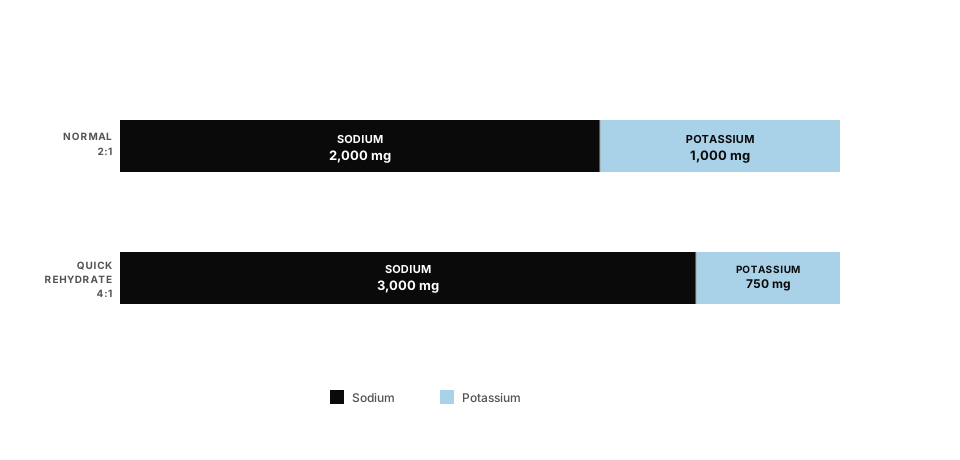
Both formulas, side by side
The per-gallon numbers for both formulas.
| Normal | Quick Rehydrate | |
|---|---|---|
| Sodium | 2,000 mg | 3,000 mg |
| Potassium | 1,000 mg | 750 mg |
| Na:K ratio | 2:1 | 4:1 |
| Use | All-day replacement | Acute rehydration |
There is no compromise blend that does both jobs well. A formula calibrated for all-day sipping is not optimized for post-race recovery, and vice versa. The choice to run two ratios rather than split the difference is a decision about not pretending one answer covers both questions.
No blend pretends to do both
The formulas are built around what the body actually needs at different times — not around a marketing claim about comprehensive electrolytes. The ratio is legible: 2:1 for daily life, 4:1 for acute need. If you know what you are doing and why, you can read the label and confirm it.
No other number on the label matters more than the ratio. The total amounts matter, the per-serving doses matter, but what ratio they are held in is the design decision — the thing that makes the formula one thing and not another.
This statement has not been evaluated by the Food and Drug Administration. This product is not intended to diagnose, treat, cure, or prevent any disease.
Sources
- Baker LB. Sweating rate and sweat sodium concentration in athletes. Sports Medicine 47(Suppl 1):111–128, 2017 — sodium is the dominant sweat electrolyte loss.
- National Academies of Sciences, Engineering, and Medicine. Dietary Reference Intakes for Sodium and Potassium. Washington, DC: The National Academies Press, 2019 — potassium Adequate Intake 3,400 mg (men) / 2,600 mg (women).
- U.S. Food & Drug Administration. Daily Value on the Nutrition and Supplement Facts Labels — sodium Daily Value 2,300 mg; potassium Daily Value 4,700 mg.
- Just Electrolyte formula specification (internal) — per-gallon mineral doses.
Two ratios, two jobs
The formula is the ratio. The science hub maps what else is in it and why.